
title: "Systems Engineering Biology"
description: "Why bypassing academic bloat and treating Ankylosing Spondylitis as a mechanical engineering problem is the key to accelerating a cure."
date: 2023-10-24
author: "33MED Engineering"
category: "The \"Patient Zero\" AS Cure Methodology"
Systems Engineering Biology: Solving Ankylosing Spondylitis as a Mechanical Failure
In traditional immunology, Ankylosing Spondylitis (AS) is viewed almost exclusively through a biochemical lens—a chronic inflammatory disease mediated by the IL-17 axis and HLA-B27 genetic markers. While this perspective has yielded biologic therapeutics that slow disease progression, it fundamentally misses the endpoint reality for patients.
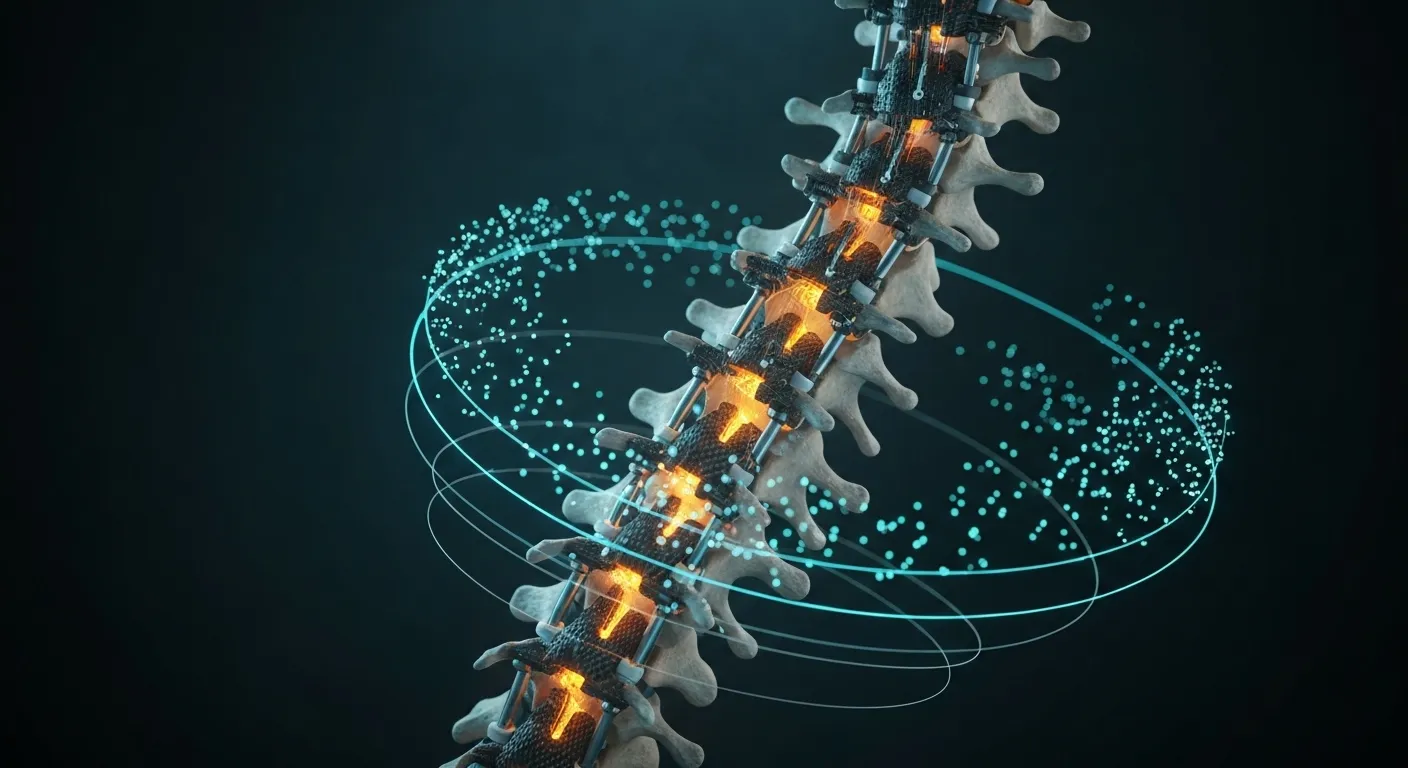
At its core, AS is not just an immune disease; it is a catastrophic biomechanical failure.
The endpoint of AS is the growth of syndesmophytes (bone bridges) that mechanically fuse the spine. Tissue calcification, abnormal joint loading, and rigid biomechanical stress are structural engineering problems. By shifting our paradigm from traditional wet-lab biology to Systems Engineering Biology, 33MED is redefining how we model, simulate, and ultimately reverse spinal fusion.
To achieve this, we cannot rely on the sluggish, fragmented infrastructure of traditional academic research. We need industrial-grade, computational swarms. Here is how 33MED is building the ImmuNav engine—a hyper-lean, autonomous infrastructure designed to treat AS as a solvable mechanical engineering challenge.
The ImmuNav Philosophy: Stripping the Academic Bloat
Traditional biotech infrastructure is plagued by academic bloat. Teams spend months wrestling with heavy Python frameworks, complex message brokers like RabbitMQ, and opaque orchestration layers just to run a single molecular dynamics simulation.
We are bypassing this entirely. The Phase 1 engine for 33MED’s ImmuNav platform operates on a highly performant, lean Node.js, MongoDB, and React ecosystem. By orchestrating robust, open-source physics and chemistry engines via native child_process CLI execution, we maintain absolute pipeline velocity without commercial licensing pitfalls.
🧬 Core Tool Matrix (100% Free & Commercial-Safe)
To safely build a commercial SaaS platform, the ImmuNav backend bypasses restricted tools (like AlphaFold 3's non-commercial wrapper) and directly interfaces with fully open alternatives. This matrix enables us to simulate both the molecular cause and the mechanical effect of AS:
| Tool | Focus Area | Licensing / Commercial Access | Node.js Integration Strategy |
|---|---|---|---|
| Chai-1 / Boltz-1 | Multimodal Molecular & Structure Prediction | Free (Apache 2.0 / MIT). Chai-1 shifted weights to Apache 2.0. | Execute via standalone pre-compiled CLI binaries, passing dynamically generated JSON/SMILES inputs. |
| GROMACS | Molecular Dynamics & Binding Thermodynamics | Free (GNU LGPL). | Spawn native gmx commands via Node child_process.spawn() to monitor real-time thread progress. |
| Bioconductor | Genomic / Transcriptomic Pathway Mapping | Free (Open Source). | Execute standalone R scripts via Rscript CLI to parse RNA/expression data sets. |
| Chaste | Tissue-Scale Cellular Calcification Modeling | Free (BSD License). | Fire compiled C++ binaries, passing agent-generated XML payloads mapping cellular parameters. |
| OpenSim CLI | Musculoskeletal Joint & Muscle Load Simulation | Free (Apache 2.0). | Programmatically execute opensim-cmd to validate physical mechanical stresses. |
By unifying tools like Chaste (cellular calcification) and OpenSim (musculoskeletal load) alongside molecular predictors, we create a continuous simulation loop from protein binding to whole-spine mechanical stress.
🏗️ The Native Node/Mongo Swarm Engine
We don’t need dedicated, over-engineered message brokers. MongoDB natively serves as our durable, atomic task queue.
1. MongoDB Schema Design
Our database architecture utilizes two foundational collections. The first tracks our AI agents, and the second acts as the lightweight execution queue, tightly binding biological objectives to computational tasks:
// Collection: agents
{
  _id: ObjectId("66654a..."),
  role: "DataIngestion" | "BioinformaticsOperator" | "Synthesis",
  status: "active" | "paused" | "awaiting_review",
  globalObjective: "Identify molecular targets to halt syndesmophyte growth and spine fusion.",
  humanGuidanceOverride: "Focus explicitly on small-molecule inhibitors targeting IL-17 pathways.",
  lastPulse: ISODate("2026-06-08T22:00:00Z")
}

// Collection: tasks (The Lightweight Queue)
{
  _id: ObjectId("66654b..."),
  agentId: ObjectId("66654a..."),
  tool: "pubmed_fetch" | "arxiv_fetch" | "gromacs" | "chai1" | "bioconductor" | "chaste",
  status: "pending_review" | "queued" | "processing" | "completed" | "failed",
  payload: {
    inputFiles: ["target_sequence.fasta"],
    md_params: { nsteps: 50000, dt: 0.002, integrator: "md" } // Validated by Zod
  },
  humanSignOff: {
    isApproved: false,
    actionedAt: null
  },
  logs: [],
  outputMetadata: { pdbId: "1AKI", finalEnergy: -420000 }
}
2. The Node.js Background Processing Loop
Within the ImmuNav Simulation Worker, a lightweight, recursive polling loop queries MongoDB for actionable jobs. It respects a global Pause state and mandates human approval before executing heavy computational physics on local hardware:
async function processQueue() {
  // 1. Structural Check: Ensure the entire swarm isn't globally paused
  const globalStatus = await db.collection('settings').findOne({ key: 'swarm_status' });
  if (globalStatus?.isPaused) {
    setTimeout(processQueue, 5000);
    return;
  }

  // 2. Fetch the next executable task (Must be approved and queued)
  const task = await db.collection('tasks').findOneAndUpdate(
    { status: 'queued', 'humanSignOff.isApproved': true },
    { $set: { status: 'processing', startedAt: new Date() } },
    { sort: { createdAt: 1 }, returnDocument: 'after' }
  );

  if (!task) {
    setTimeout(processQueue, 2000); // Back off if queue is empty
    return;
  }

  try {
    // 3. Native binary execution via Node Child Processes
    const binaryProcess = child_process.spawn(getToolBinary(task.tool), task.payload.cliArgs);

    binaryProcess.stderr.on('data', (data) => {
      // Append runtime logs directly to the MongoDB task document
      db.collection('tasks').updateOne({ _id: task._id }, { $push: { logs: data.toString() } });
    });

    binaryProcess.on('close', async (code) => {
      if (code === 0) {
        await handleTaskSuccess(task);
      } else {
        await db.collection('tasks').updateOne({ _id: task._id }, { $set: { status: 'failed' } });
      }
      processQueue(); // Instantly jump to the next job
    });

  } catch (error) {
    await db.collection('tasks').updateOne({ _id: task._id }, { $set: { status: 'failed', error: error.message } });
    processQueue();
  }
}
📡 Automated Data Ingestion: Fueling the Swarm
To build the foundational knowledge base for our agents, we implemented an automated background pipeline harvesting real-time literature regarding syndesmophyte formation and mechanobiology.
- PubMed Sourcing: Utilizing free programmatic access (NCBI Entrez E-utilities API key), ImmuNav leverages an elevated 10 requests/second rate limit. Node fetches literature targeting strict keyword pairs (e.g.,
Ankylosing Spondylitis AND syndesmophyte). - arXiv Sourcing: We query the native arXiv Atom/XML feed endpoint (
cat:q-bio.*) for bleeding-edge computational biology preprints. - Gemini Pipeline Integration: Raw XML chunks are piped directly to the Google Gemini SDK (
@google/generative-ai), strictly enforcing structured JSON extraction:
const systemPrompt = `You are an expert computational immunologist. Analyze the provided scientific text.
Extract any explicit molecular targets, binding affinities, genetic expressions, or pathways related to Ankylosing Spondylitis.
Return the output strictly in the following JSON format:
{
  targetProtein: "string",
  associatedCytokines: ["string"],
  observedEffect: "string",
  confidenceScore: 0.00
}`;

const result = await geminiModel.generateContent([systemPrompt, rawPaperText]);
const structuredData = JSON.parse(result.response.text());
await db.collection('knowledge_base').insertOne(structuredData);
🎛️ Human-In-The-Loop (HITL) React Control Center
Automation without oversight is dangerous, especially in computational physics. To guarantee absolute executive control without manual config tinkering, our React Frontend features a centralized Swarm Management Dashboard.
┌──────────────────────────────────────────────────────────────────────────────┐
│ IMMUNAV AUTOMATION HUB                                [ SYSTEM STATUS: RUNNING ] │
├──────────────────────────────────────────────────────────────────────────────┤
│ [ 🛑 GLOBAL SWARM PAUSE ]   [ 🔄 RESUME SYSTEM ]   [ ✍️ EDIT GLOBAL OBJECTIVE ] │
├──────────────────────────────────────────────────────────────────────────────┤
│ ACTIVE AGENTS                                                                │
│ 🤖 Agent_Ingestion_1  │ Status: [ WORKING ]  │ Task: Scraping arXiv q-bio    │
│ 🤖 Agent_Operator_3   │ Status: [ BLOCKED ]  │ Task: Awaiting Config Approval│
├──────────────────────────────────────────────────────────────────────────────┤
│ 🚨 AGENT CONFIGURATION APPROVAL GATEWAY                                      │
│ Task ID: #98322  │ Tool Target: GROMACS Molecular Dynamics                    │
│ Target Interaction: Small-molecule inhibitor binding to IL-17 Receptor        │
│                                                                              │
│ [ View Agent-Suggested md_params Payload ]                                   │
│  {                                                                           │
│    "integrator": "md",                                                       │
│    "nsteps": 50000,                                                          │
│    "dt": 0.002                                                               │
│  }                                                                           │
│                                                                              │
│  ✏️ [ Manually Edit JSON Parameters Inline ]                                  │
│  ──────────────────────────────────────────────────────────────────────────  │
│            [ ❌ REJECT CONFIGURATION ]      [ ⚠️ APPROVE & RUN JOB ]          │
└──────────────────────────────────────────────────────────────────────────────┘
- The Global Interrupter: Toggling "Global Pause" updates
settings.swarm_status. Because the backend worker checks this boolean before processing, the entire swarm halts safely without crashing mid-calculation. - The Guidance Injector: Directional pivots are captured via a text interface and appended to the agent's database document. The next time the backend hits Gemini for parameters, it natively integrates your live text into the prompt design.
- The Mandatory Approval Gate: Agents output configurations in a
pending_reviewstate. You verify theZod-validated parameters, click Approve, and push the task to local hardware.
🧪 Iterating Fast: The Micro-Dataset Protocol
Building this mechanical architecture requires rapid feedback loops. We enforce strict micro-testing sandboxes to prevent crashing hardware or burning API quotas:
- Data Sourcing Sandboxing: We hardcode constraints during development (
&retmax=3for PubMed,&max_results=3for arXiv). This ensures our regex sanitizers and LLM extractors process flawlessly before opening the data floodgates. - Molecular Sandbox: We benchmark automated Chai-1 and GROMACS scripts on Hen Egg White Lysozyme (PDB ID: 1AKI)—a tiny standard structure. Energy minimization runs in under 2 minutes, verifying that the Node runtime properly handles exit codes and stdout strings.
- Mechanical Sandbox: Rather than loading complete spinal skeletal rigs during software architecture development, we pull single-joint pendulum templates from OpenSim and 2D cellular grids from Chaste. This validates our React rendering loops, parameter adjustments, and post-run thermodynamic charting at lighting speeds.
Traditional biology attempts to decode the entire cellular universe to find a cure. 33MED is taking the engineer's approach: isolate the mechanical failure point, simulate the stresses, and synthesize the precise structural fix. With ImmuNav, the cure for Ankylosing Spondylitis isn't decades away in a wet lab—it's executing in the queue right now.