
title: "Replacing Saws with Cold Lasers: The Robotic Osteotomy Revolution for Cellular Preservation"
description: "How 33MED's ImmuNav engine utilizes lean Node.js swarms, AI bioinformatics, and open-source computational physics to drive the next generation of cold-laser spinal robotics."
date: 2023-10-24
author: "33MED Engineering"
category: "Spine3D, Biomechanics & Surgical Robotics"
Orthopedic surgery harbors a brutal, archaic secret: the oscillating bone saw. Despite decades of advancements in surgical navigation, the physical act of cutting bone remains functionally identical to a 19th-century carpentry shop. Saws cause massive acoustic shockwaves, micro-fractures, and most critically, thermal necrosis—the localized boiling and death of bone cells adjacent to the cut. When osteoblasts and osteoclasts are obliterated by friction-induced heat, post-operative healing is severely compromised.
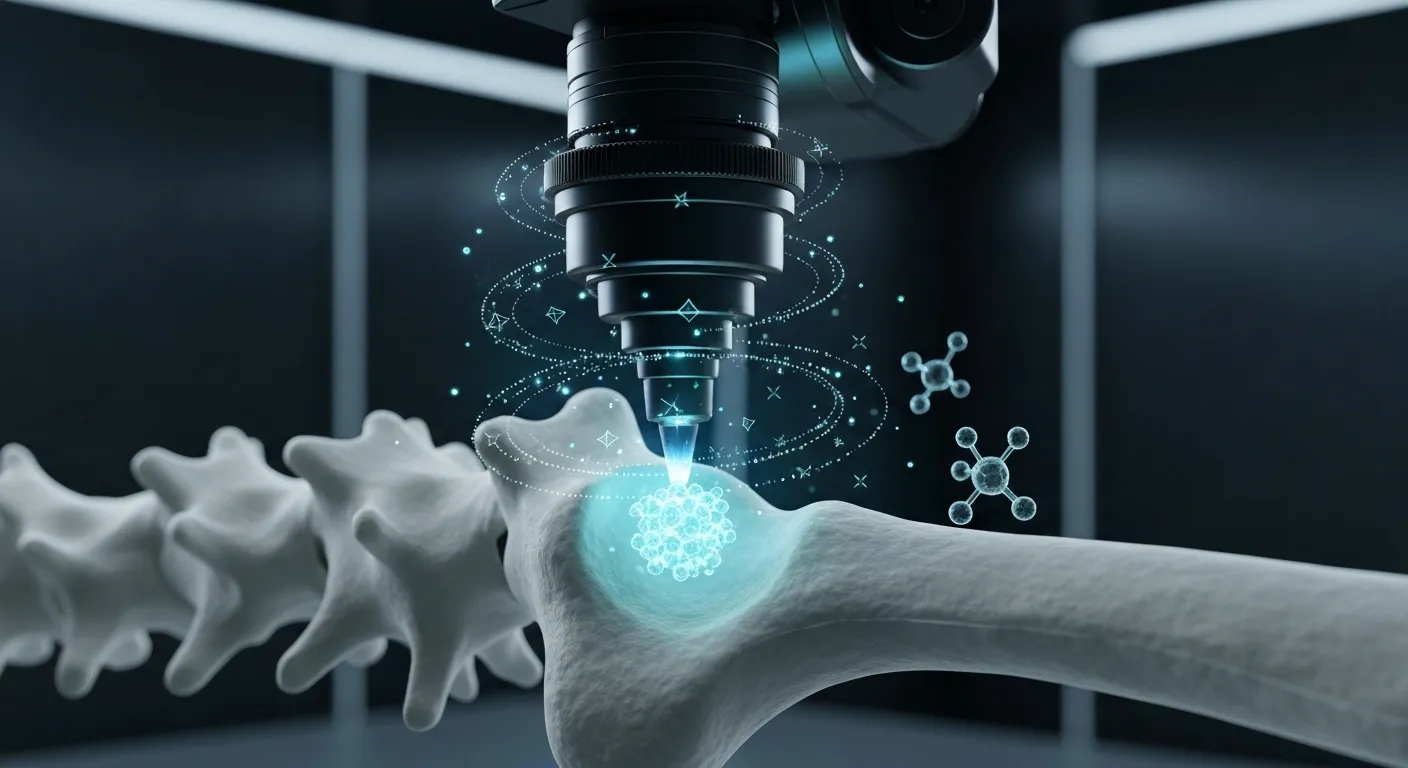
At 33MED, we are engineering the Spine3D platform to eliminate the saw entirely, replacing it with precision-guided cold lasers (ultra-short pulse ablation) that cut at the micron level without raising the temperature of surrounding tissues. But to execute robotic osteotomy with cold lasers, the system requires an unprecedented understanding of patient biomechanics, cellular calcification, and molecular biology.
To power this robotic revolution, we have built ImmuNav—our Phase 1 computational immunology and bioinformatics engine. Stripped of academic infrastructure bloat (no Python frameworks, no RabbitMQ, no complex database layers), ImmuNav is a highly performant, lean Node.js, MongoDB, and React ecosystem designed to be the "brain" behind the beam.
Here is the comprehensive engineering architecture powering the 33MED autonomous surgical infrastructure.
🧬 Core Tool Matrix: Commercial-Safe Open Computation
To safely build a commercial SaaS and robotic control platform without licensing pitfalls, ImmuNav bypasses restricted tools. Instead, our Node.js backend orchestrates a swarm of fully open, commercial-safe alternatives using native child_process CLI execution. This stack models everything from the molecular targets of spinal fusion diseases to the physical joint stresses post-osteotomy.
| Tool | Focus Area | Licensing / Commercial Access | Node.js Integration Strategy |
|---|---|---|---|
| Chai-1 / Boltz-1 | Multimodal Molecular & Structure Prediction | Free (Apache 2.0 / MIT). Chai-1 shifted weights to Apache 2.0. | Execute via standalone pre-compiled CLI binaries, passing dynamically generated JSON/SMILES inputs. |
| GROMACS | Molecular Dynamics & Binding Thermodynamics | Free (GNU LGPL). | Spawn native gmx commands via Node child_process.spawn() to monitor real-time thread progress. |
| Bioconductor | Genomic / Transcriptomic Pathway Mapping | Free (Open Source). | Execute standalone R scripts via Rscript CLI to parse RNA/expression data sets. |
| Chaste | Tissue-Scale Cellular Calcification Modeling | Free (BSD License). | Fire the compiled C++ binary, passing an agent-generated XML payload mapping cellular parameters for the laser trajectory. |
| OpenSim CLI | Musculoskeletal Joint & Muscle Load Simulation | Free (Apache 2.0). | Programmatically execute opensim-cmd to validate physical mechanical stresses on the spine post-cut. |
🏗️ The Native Node/Mongo Swarm Engine
We do not rely on dedicated message brokers. For a highly deterministic, low-latency surgical intelligence system, MongoDB serves as a durable, atomic task queue using standard queries.
1. MongoDB Schema Design
Our database architecture utilizes two foundational collections to track agent parameters and manage the computational pipeline—ensuring every molecular simulation and laser trajectory calculation is perfectly queued:
// Collections: agents
{
  _id: ObjectId("66654a..."),
  role: "DataIngestion" | "BioinformaticsOperator" | "Synthesis",
  status: "active" | "paused" | "awaiting_review",
  globalObjective: "Identify molecular targets to halt syndesmophyte growth and spine fusion.",
  humanGuidanceOverride: "Focus explicitly on small-molecule inhibitors targeting IL-17 pathways.",
  lastPulse: ISODate("2026-06-08T22:00:00Z")
}

// Collections: tasks (The Lightweight Queue)
{
  _id: ObjectId("66654b..."),
  agentId: ObjectId("66654a..."),
  tool: "pubmed_fetch" | "arxiv_fetch" | "gromacs" | "chai1" | "bioconductor" | "chaste",
  status: "pending_review" | "queued" | "processing" | "completed" | "failed",
  payload: {
    inputFiles: ["target_sequence.fasta"],
    md_params: { nsteps: 50000, dt: 0.002, integrator: "md" } // Validated by Zod
  },
  humanSignOff: {
    isApproved: false,
    actionedAt: null
  },
  logs: [],
  outputMetadata: { pdbId: "1AKI", finalEnergy: -420000 }
}
2. The Node.js Background Processing Loop
Within the Simulation Worker (Port 4000), a lightweight, recursive polling loop queries MongoDB for actionable jobs. Crucially, it respects our global Pause state and enforces mandatory human approvals before touching the robotic hardware or demanding heavy GPU compute:
async function processQueue() {
  // 1. Structural Check: Ensure the entire swarm isn't globally paused
  const globalStatus = await db.collection('settings').findOne({ key: 'swarm_status' });
  if (globalStatus?.isPaused) {
    setTimeout(processQueue, 5000);
    return;
  }

  // 2. Fetch the next executable task (Must be approved and queued)
  const task = await db.collection('tasks').findOneAndUpdate(
    { status: 'queued', 'humanSignOff.isApproved': true },
    { $set: { status: 'processing', startedAt: new Date() } },
    { sort: { createdAt: 1 }, returnDocument: 'after' }
  );

  if (!task) {
    setTimeout(processQueue, 2000); // Back off if queue is empty
    return;
  }

  try {
    // 3. Native binary execution via Node Child Processes
    const binaryProcess = child_process.spawn(getToolBinary(task.tool), task.payload.cliArgs);

    binaryProcess.stderr.on('data', (data) => {
      // Append runtime logs directly to the MongoDB task document
      db.collection('tasks').updateOne({ _id: task._id }, { $push: { logs: data.toString() } });
    });

    binaryProcess.on('close', async (code) => {
      if (code === 0) {
        await handleTaskSuccess(task);
      } else {
        await db.collection('tasks').updateOne({ _id: task._id }, { $set: { status: 'failed' } });
      }
      processQueue(); // Instantly jump to the next job
    });

  } catch (error) {
    await db.collection('tasks').updateOne({ _id: task._id }, { $set: { status: 'failed', error: error.message } });
    processQueue();
  }
}
📡 Data Collection Engine: Mapping Ankylosing Spondylitis
Before Spine3D can perform a perfect osteotomy, ImmuNav must understand the exact pathology of the bone it is cutting. Our automated background tasks harvest raw literature to map syndesmophyte growth (the pathological bone bridges in Ankylosing Spondylitis).
- PubMed Sourcing (NCBI Entrez E-utilities): Utilizing a free programmatic API key, our Node.js backend hits 10 requests/second via
axios, targeting explicit keyword pairs (Ankylosing Spondylitis AND syndesmophyte). - arXiv Sourcing: Querying the native arXiv Atom/XML feed endpoint for pre-print biomechanical and biophysics models.
- Gemini Pipeline Integration: Raw XML text is passed to the Google Gemini SDK (
@google/generative-ai) to extract structured biological insights into our database:
const systemPrompt = `You are an expert computational immunologist. Analyze the provided scientific text.
Extract any explicit molecular targets, binding affinities, genetic expressions, or pathways related to Ankylosing Spondylitis.
Return the output strictly in the following JSON format:
{
  targetProtein: "string",
  associatedCytokines: ["string"],
  observedEffect: "string",
  confidenceScore: 0.00
}`;

const result = await geminiModel.generateContent([systemPrompt, rawPaperText]);
const structuredData = JSON.parse(result.response.text());
await db.collection('knowledge_base').insertOne(structuredData);
🎛️ Absolute Command: The HITL React Control Center
A medical-grade robotic and AI swarm cannot operate as a black box. To guarantee absolute executive control without modifying code, our React Frontend (Port 5173) serves as a Human-In-The-Loop (HITL) Swarm Management Dashboard.
┌──────────────────────────────────────────────────────────────────────────────┐
│ IMMUNAV AUTOMATION HUB                                [ SYSTEM STATUS: RUNNING ] │
├──────────────────────────────────────────────────────────────────────────────┤
│ [ 🛑 GLOBAL SWARM PAUSE ]   [ 🔄 RESUME SYSTEM ]   [ ✍️ EDIT GLOBAL OBJECTIVE ] │
├──────────────────────────────────────────────────────────────────────────────┤
│ ACTIVE AGENTS                                                                │
│ 🤖 Agent_Ingestion_1  │ Status: [ WORKING ]  │ Task: Scraping arXiv q-bio    │
│ 🤖 Agent_Operator_3   │ Status: [ BLOCKED ]  │ Task: Awaiting Config Approval│
├──────────────────────────────────────────────────────────────────────────────┤
│ 🚨 AGENT CONFIGURATION APPROVAL GATEWAY                                      │
│ Task ID: #98322  │ Tool Target: GROMACS Molecular Dynamics                    │
│ Target Interaction: Small-molecule inhibitor binding to IL-17 Receptor        │
│                                                                              │
│ [ View Agent-Suggested md_params Payload ]                                   │
│  {                                                                           │
│    "integrator": "md",                                                       │
│    "nsteps": 50000,                                                          │
│    "dt": 0.002                                                               │
│  }                                                                           │
│                                                                              │
│  ✏️ [ Manually Edit JSON Parameters Inline ]                                  │
│  ──────────────────────────────────────────────────────────────────────────  │
│            [ ❌ REJECT CONFIGURATION ]      [ ⚠️ APPROVE & RUN JOB ]          │
└──────────────────────────────────────────────────────────────────────────────┘
- The Global Interrupter: Toggling the Global Pause updates
settings.swarm_statusto{ isPaused: true }in MongoDB. The backend worker catches this and halts all hardware execution seamlessly. - The Guidance Injector: Engineers can pivot agent objectives on the fly. This text merges directly into the Gemini system instructions on the next cycle.
- The Mandatory Approval Gate: Agents formulate GROMACS or Chaste simulation runs, but they sit in
pending_review. Engineers verify and tweak theZod-validated parameters, clicking Approve to pass the job to local hardware.
🧪 Micro-Dataset Testing Protocol (Local Safety Loops)
In surgical robotics and high-performance computational physics, testing locally can easily exhaust API quotas or melt standard hardware. We enforce a strict micro-testing protocol:
- Data Sourcing Sandboxing: Retrieval loops are hardcoded with low boundaries during testing (e.g.,
&retmax=3for PubMed). This guarantees that scraping functions, regex sanitizers, and Gemini extraction steps perform flawlessly before opening the data floodgates. - Molecular Modeling Sandbox: Before analyzing complex human spinal proteins, we benchmark our automated GROMACS/Chai-1 scripts using Hen Egg White Lysozyme (PDB ID:
1AKI). Energy minimization sequences on Lysozyme execute in under 2 minutes, creating rapid feedback loops to verify that our Node runtime parses exit codes and stdout strings perfectly. - Mechanical Modeling Sandbox: We utilize the 2D cellular grid templates in Chaste and the single-joint pendulum templates in OpenSim during software development. These lightweight test cases validate our React dashboard's rendering of thermodynamic charts and configuration panels without requiring the computational overhead of full biomechanical skeletal rigs.
By replacing academic bloat with a surgically precise Node.js/Mongo infrastructure, 33MED is not just building better software—we are laying the foundational intelligence required to replace the saw with the laser. The cellular matrix demands precision. ImmuNav delivers it.