---
title: "Regenerative Medicine for the Spine"
description: "How 33MED relies on a lean, autonomous computational stack to model and deploy Mesenchymal Stem Cell (MSC) therapies for reversing Ankylosing Spondylitis."
date: 2023-10-24
author: "33MED Engineering"
category: "The \"Patient Zero\" AS Cure Methodology"
---
Regenerative Medicine for the Spine: Architecting the MSC Blueprint
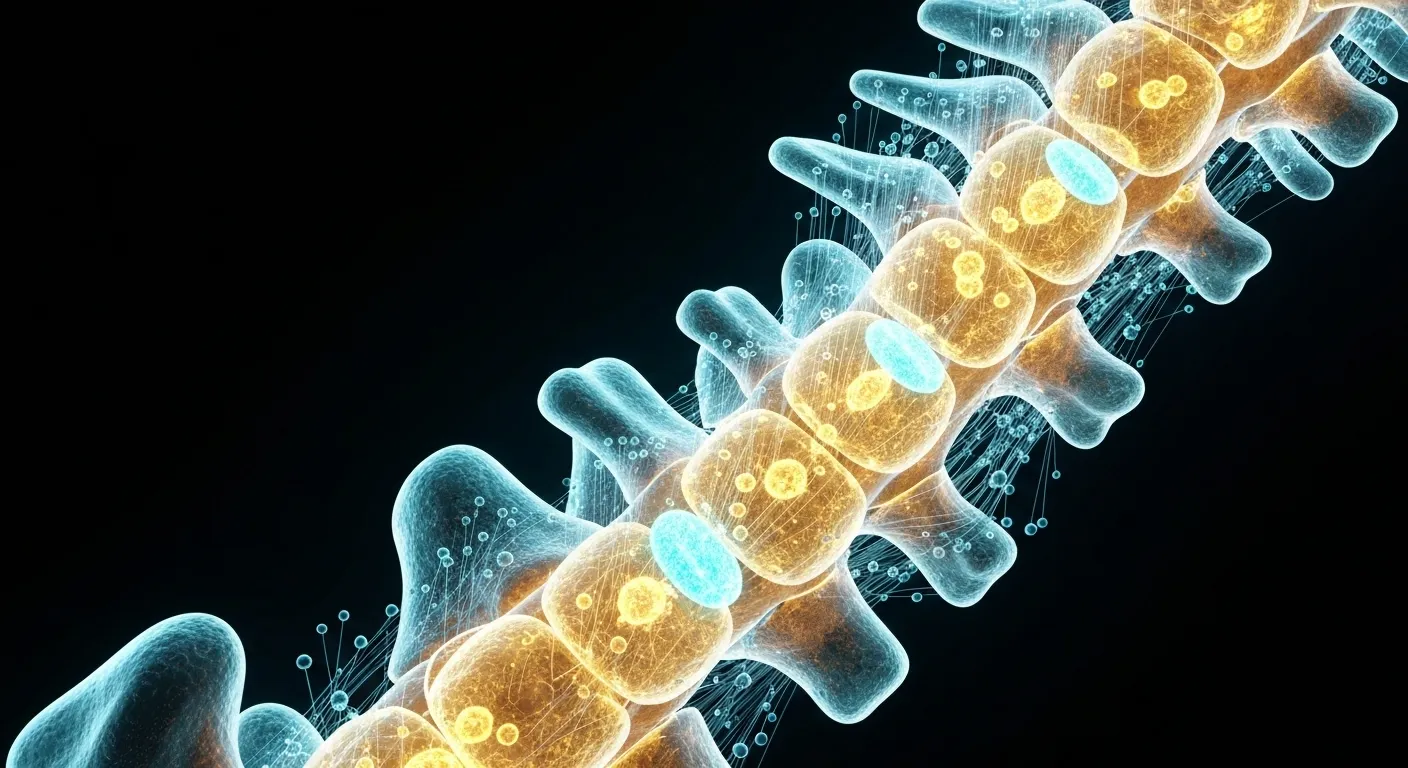
To cure Ankylosing Spondylitis (AS), we must transcend disease management and engineer true structural reversal. In the 33MED "Patient Zero" methodology, the biological payload for this reversal relies heavily on Mesenchymal Stem Cells (MSCs). Possessing powerful immunomodulatory properties and the capacity to drive chondrogenic (cartilage) regeneration, MSCs present a unique mechanism to halt syndesmophyte calcification and restore disc integrity.
However, deploying cellular therapies requires unprecedented precision. At 33MED, we are bridging the gap between computational immunology, surgical robotics, and regenerative biology. To process the immense complexity of MSC behavior, we are evolving the ImmuNav prototype into our foundational Phase 1 engine.
This is the definitive engineering blueprint for how 33MED utilizes a strictly commercial-safe, high-performance Node.js, MongoDB, and React ecosystem to autonomously model MSC integration into the human spine.
🧬 The Bio-Computational Engine: Stripping Academic Bloat
Academic bioinformatics is notoriously bloated. To execute a commercial SaaS platform capable of real-time clinical modeling, we have eradicated Python frameworks, RabbitMQ brokers, and complex database layers.
ImmuNav's architecture relies on native child_process CLI execution directly from a Node.js backend. This allows us to orchestrate a matrix of 100% free and commercial-safe tools to simulate MSC pathways:
| Tool | Focus Area for MSC Therapy | Licensing / Integration |
|---|---|---|
| Chai-1 / Boltz-1 | Multimodal molecular prediction of MSC-derived exosomes and surface receptors. | Apache 2.0 / MIT. Standalone pre-compiled CLI binaries via Node. |
| GROMACS | Binding thermodynamics between MSC immunomodulators and IL-17 cytokines. | GNU LGPL. Native gmx commands spawned via Node child_process. |
| Bioconductor | Transcriptomic pathway mapping of MSC differentiation. | Open Source. Standalone R scripts executed via Rscript CLI. |
| Chaste | Tissue-scale modeling of MSCs actively combating spinal calcification. | BSD License. Compiled C++ binaries executing XML payloads. |
| OpenSim CLI | Simulating musculoskeletal joint load relief post-MSC tissue regeneration. | Apache 2.0. Programmatic execution via opensim-cmd. |
📡 The Autonomous MSC Data Ingestion Pipeline
Before simulating MSC behavior, our AI swarm must synthesize the entirety of global literature surrounding spinal regeneration.
Our Data Ingestion Agents operate as background Node.js processes, pulling from the NCBI Entrez E-utilities (PubMed) and arXiv APIs. By generating a free NCBI API key, we elevate programmatic access to 10 requests/second, streaming XML text directly into our backend.
Once ingested, the raw literature is passed to the Google Gemini SDK (@google/generative-ai) to extract structured biological insights regarding MSC behavior.
const systemPrompt = `You are an expert computational immunologist at 33MED. Analyze the provided scientific text regarding Mesenchymal Stem Cells (MSCs).
Extract explicit molecular targets, binding affinities, genetic expressions, or chondrogenic pathways related to Ankylosing Spondylitis reversal.
Return the output strictly in the following JSON format:
{
  targetProtein: "string",
  associatedCytokines: ["string"],
  observedEffect: "string", // e.g., "Inhibition of IL-17 pathway" or "Promotion of chondrogenesis"
  confidenceScore: 0.00
}`;

const result = await geminiModel.generateContent([systemPrompt, rawPaperText]);
const structuredData = JSON.parse(result.response.text());
await db.collection('knowledge_base').insertOne(structuredData);
🏗️ The Native Node/Mongo Swarm Engine
We do not use dedicated message brokers to manage MSC simulation tasks. MongoDB operates as our durable, atomic task queue using standard, heavily indexed queries.
Our schema dictates agent parameters explicitly directed toward regenerative outcomes:
// Collection: agents
{
  _id: ObjectId("66654a..."),
  role: "BioinformaticsOperator",
  status: "active",
  globalObjective: "Identify molecular targets to halt syndesmophyte growth and stimulate MSC chondrogenesis.",
  humanGuidanceOverride: "Focus explicitly on MSC-derived small-molecule inhibitors targeting IL-17 pathways.",
  lastPulse: ISODate("2024-10-25T22:00:00Z")
}
In the Simulation Worker (Port 4000), a lightweight, recursive polling loop queries MongoDB for actionable computational jobs. By spawning native binaries (like GROMACS or Chaste) via child_process, we stream standard error logs directly back to the database, ensuring absolute observability over the cellular simulations.
🎛️ The Human-In-The-Loop (HITL) React Control Center
Deploying autonomous agents to design MSC treatments demands explicit executive control. We maintain total oversight without modifying code via the ImmuNav Swarm Management Dashboard (React, Port 5173).
┌──────────────────────────────────────────────────────────────────────────────┐
│ IMMUNAV AUTOMATION HUB                                [ SYSTEM STATUS: RUNNING ] │
├──────────────────────────────────────────────────────────────────────────────┤
│ [ 🛑 GLOBAL SWARM PAUSE ]   [ 🔄 RESUME SYSTEM ]   [ ✍️ EDIT GLOBAL OBJECTIVE ] │
├──────────────────────────────────────────────────────────────────────────────┤
│ ACTIVE AGENTS                                                                │
│ 🤖 Agent_Ingestion_1  │ Status: [ WORKING ]  │ Task: Scraping PubMed for MSCs│
│ 🤖 Agent_Operator_3   │ Status: [ BLOCKED ]  │ Task: Awaiting Config Approval│
├──────────────────────────────────────────────────────────────────────────────┤
│ 🚨 AGENT CONFIGURATION APPROVAL GATEWAY                                      │
│ Task ID: #98322  │ Tool Target: GROMACS Molecular Dynamics                    │
│ Target Interaction: MSC exosome peptide binding to IL-17 Receptor             │
│                                                                              │
│ [ View Agent-Suggested md_params Payload ]                                   │
│  {                                                                           │
│    "integrator": "md",                                                       │
│    "nsteps": 50000,                                                          │
│    "dt": 0.002                                                               │
│  }                                                                           │
│                                                                              │
│  ✏️ [ Manually Edit JSON Parameters Inline ]                                  │
│  ──────────────────────────────────────────────────────────────────────────  │
│            [ ❌ REJECT CONFIGURATION ]      [ ⚠️ APPROVE & RUN JOB ]          │
└──────────────────────────────────────────────────────────────────────────────┘
- The Global Interrupter: Toggling the Global Pause updates
settings.swarm_statusto{ isPaused: true }. The backend worker safely halts the swarm without breaking ongoing thermodynamic calculations. - The Guidance Injector: Leadership can append text directly to the agent's DB document. When the backend requests Gemini to compile parameters, it merges your live text directly into the system instructions.
- The Mandatory Approval Gate: Agents design simulation runs, but they do not execute them. Parameters (validated by
Zod) wait in apending_reviewstate. Clicking Approve passes the molecular job down to the local hardware execution loop.
🧪 Local Safety Loops: The Micro-Dataset Protocol
Modeling tissue-scale cellular calcification and MSC interactions is computationally expensive. To iterate rapidly on our architecture, 33MED enforces a strict micro-testing protocol:
- Data Sourcing Sandboxing: We hardcode boundaries during script testing (
&retmax=3for PubMed,&max_results=3for arXiv). This verifies our regex sanitizers and Gemini extractors perfectly process a fraction of MSC data before opening the floodgates. - Molecular Modeling Sandbox: Before simulating complex MSC surface receptors in Chai-1 or GROMACS, we test automation scripts using Hen Egg White Lysozyme (PDB ID:
1AKI). This tiny benchmark structure minimizes in under 2 minutes, verifying that the Node runtime properly handles exit codes and stdout string parsing. - Mechanical Modeling Sandbox: We rely on single-joint pendulum templates within OpenSim and 2D grid models in Chaste to validate backend-to-frontend UI rendering and parameter adjustments before loading full biomechanical skeletal rigs.
By converging robust computational immunology with Mesenchymal Stem Cell biology, 33MED is not just predicting outcomes—we are actively engineering the cure for Patient Zero.